The Hiner Lab.
The Hiner Lab puts unmanned systems to work in the field. Drones for logistics, search and rescue, last-mile delivery, and coastal surveillance, integrated into civilian aviation, maritime operations, and the energy sector.
Led by Michael Hiner, geologist and geophysicist.
Publications
Every paper from this lab is a living one. Read it, run its model inline, ask it questions, call its method as a tool from Claude, navigate its place in the corpus, or let the Institute host speak it, a presence assembled from the paper's own concepts.
◆ The living corpusThe graphIn space · XR◆ Run as tools · MCP
The Bayou Air Corridor.
Houston's bayous are continuous public greenways: water and parkland threading the whole metro, the lowest-risk ground in the city to fly over. The lab treats that network as managed low-altitude airspace, an AI volume-management layer that keeps drones and eVTOL traffic safely separated in shared corridors, with flood search-and-rescue as the first mission and infrastructure inspection as the recurring one.
Open the full console ↗An illustrative operations twin on Houston's real geography. Traffic, rates, and conflicts are simulated, not live.
↓ Whitepaper · PDFRead online◆ Living paperTechnical Report TR-2026-17 · Institute for Physical AI @ JBI
Shoal: fish that forage the pollution and report what they find.
Houston is a water city as much as an air one: bayous, the Ship Channel, harbor docks, industrial outfalls. Where the Bayou Air Corridor manages what flies over the water, Shoal is a research concept for working in it. The design is a swarm of small soft-bodied fish that would forage a contaminated waterway and draw power from the pollution itself: microbial fuel-cell stacks in their guts metabolize hydrocarbons, BTEX, and dissolved organics, while mechanical capture pulls microplastics and heavy metals for return-to-dock disposal, and each fish maps water quality as it goes. The pollutant is the fuel, so the cleanup helps pay for its own energy. Each fish would run a plume-tracking policy on-device, accounted in joules, recharged and serviced by a field of passive benthic docks that swap gut cartridges and offload the data to shore. It is a distributed sensing-and-remediation layer for a watershed, built on the lab's perception, energy, and cognition stack in a body made for the water. Shoal is an open project, developed with OpenIE.
shoal on GitHub ↗Documentation ↗An illustrative model of a shoal foraging a polluted reach: fish track plumes, eat hydrocarbons for power, capture microplastics, and fill in the water-quality map. Open-source, hardware, software, and data.
The robots that tend the shoal.
A shoal's docks need tending: gut cartridges swapped, waste hoppers cleared, intake screens and rake arrays serviced. That work is done by an open-hardware humanoid family: one shared 21-DoF upper body on three different lower bodies, each matched to a dock's environment, part of the OpenIE humanoid family. They are reference designs in development, shielded by an open prior-art commons.
Wheeled
The shared upper body on a wheeled differential-drive base for paved service sites, stormwater outfalls, harbor docks, industrial discharge. Integrates with the dock's cartridge-swap and waste-handling logistics.
Centaur
A humanoid torso on a wheel-leg-hybrid quadruped base (paved-surface speed in wheel mode, rough-terrain footing in leg mode) for benthic docks on remote rivers, marine sites, and wetlands.
Submersible
A bimanual upper body on a negatively-buoyant eight-thruster vectored pod, full 6-DoF station-keeping for in-water work: rake arrays, intake screens, bilge lines, and hull-mating fixtures below the waterline.
One upper body, three lower bodies: each compiled from a single descriptor through OpenLoco (URDF · MJCF · STL · BOM). Open-hardware reference designs, in development.
AI + UAS: develop the swarm, deploy to metal.
Teaching autonomy should not require a hangar. The lab builds a drone swarm you run, a deterministic, batched physics engine that steps thousands of quadrotors in parallel on the GPU already in the laptop. It is Perceive → Simulate → Act made literal: a student writes a controller, flies a fleet, and the same compiled WASM module (one binary, no port) drives a real Pixhawk aircraft over MAVLink. The engine is deterministic where it counts: the swarm's full trajectory is fixed-point and reproducible: hashed, and bit-exact by construction, so a result can be graded, replayed, and trusted. It runs on the Charlot Lab's WebGPU and WASM stack and is the spine of the lab's AI + UAS course, an NDAA-clean teaching fleet that runs from the sim to indoor swarm hardware to Blue-UAS field platforms.
Open the live bench ↗swarm-bench on GitHub ↗The AI + UAS course ↗This is the real WGSL solver running live on your GPU via WebGPU, the fleet is integrated on-device each frame, with a cascaded controller holding formation. The same kernel, in fixed-point, is bit-exact across backends; the identical SHA-256 trajectory is verified on Apple (Metal), NVIDIA A10 (Vulkan), and a software reference, with AMD validation pending. Open-source (CC0).
In the field · batched drone sims fly thousands of craft on the GPU (MuJoCo MJX, Crazyflow), but they run native and in floating point, reproducible only to a seed, never bit-exact across hardware. A deterministic, fixed-point swarm is the gap those tools leave open.
One fluid, three currents: microfluidics as a shared substrate for Physical AI.
A joint topic between the Charlot and Hiner labs, at the seam where computation meets energy. In an embodied system the same wet, ionic medium can do three jobs at once: carry heat out of the die, carry charge in to power it, and carry information as computation. Embedded microchannels already extract heat past 1.7 kW/cm²; redox-flow cells deliver localized power beneath the junction; and nanofluidic iontronic memristors compute in the electrolyte itself, at roughly 0.2 femtojoules per switch. The claim of the topic is that these are one network on one dissipation budget, and that pricing any of them alone is wrong once they share a flow. Heat and charge are positively coupled: waste heat upgrades the redox delivery, so removed dissipation returns in part as power. Flow is adversarial: more of it cools better but wastes power and costs pumping. And through the Soret effect a thermal gradient writes the ionic computational state, so cooling and computing are not separable. The right objective is not watts per square centimetre or joules per operation in isolation but exergy destroyed per useful outcome, over the shared network, credited for recovered heat, a joule-priced primitive in the Charlot Lab's sense, engineered to the Hiner Lab's energy and fluid discipline. A determinism constraint keeps it safe: the readout is committed as a fixed-point word and checked by hash, so an operating point may change speed and cost but never the emitted result, which sets a floor on how hot the die may run. The physics is public; the co-optimization is released as an open CC0 defensive publication.
Turn the flow and the compute load and watch the three currents trade through one number: exergy destroyed per useful outcome. The joint optimum is not the coolest setting, it runs a little warmer to cut pumping and recover charge, and the determinism floor, the physical-AI safety constraint, sets how low the flow can go. Illustrative first-order model: the coupling signs (K1–K3) and the exergy accounting are the point, not the absolute numbers.
In the field · conical microfluidic memristors (Kamsma et al., PRL 2023) show the synaptic vocabulary in confined channels (potentiation, threshold switching) and aqueous iontronic devices have been run as physical reservoir computers (PNAS 2024), a leaky reservoir on a leaky substrate. The load-bearing, shipping half is thermal and electrical: co-designed embedded cooling (van Erp et al., Nature 2020) puts microchannels at the transistor hotspots, and backside redox-flow cells deliver power under the junction. The topic's line is the joint one: heat, charge, and information as a single locality principle (do it in the medium, at the point of use) priced together in exergy, on the Charlot Lab deterministic-compute stack. The disclosure is CC0 prior art; no term in it is enclosable.
↓ White paper · PDFRead online◆ Living paperTechnical Report TR-2026-04 · Institute for Physical AI @ JBI
↓ Disclosure · PDFRead onlineDefensive publication DP-2026-01 · CC0 1.0 · public-domain prior art
Energy-native compute: the reproducibility you can afford.
A second joint topic between the Charlot and Hiner labs, at the same seam from the other side. In a low-power substrate, energy conversion and computation are often the identical physical mechanism, studied by two communities that do not cite each other, where one says harvesting, the other says computing. Order every scheme by one honest axis: how many domain crossings survive between the energy source and the computational state variable. Each crossing is a conversion loss and a frozen interface. The spectrum runs from separated (source, supply, regulated rail, digital compute) down to identity, where the source variable is the compute variable and there are no crossings left. Identity is not speculative: light already performs a linear transform on its own energy, and a neuron already computes on an ion gradient. It is empty but implementable in the ionic and thermal carriers, where both halves are peer-reviewed and shelved apart. But the spectrum has a diagonal, and it is a design law: every crossing you delete to kill the conversion tax is a crossing where you could have re-clocked or restored state to enforce reproducibility. Efficiency and bit-invariance are bought with the same coin, the deleted interface, so the most efficient substrate inherits the raw noise of its carrier. The topic's contribution is how to buy reproducibility back without paying a crossing: stop demanding bit-identity of the noisy microstate and demand invariance only of the attractor basin the dissipative substrate settles into on its own. The settling is the error correction; commit and attest the basin label, not the trajectory, and the attestation costs a few bits of outcome, not the whole analog state. The price is a thermodynamic one, a Landauer-analog for reproducibility. The barrier height you must spend to reject supply noise of a given amplitude is a lower bound: spend less and the basins are too shallow to reject it, and the reproducibility is not there to buy at any lower price. This inverts a premise the low-power field treats as gospel, reversible computing saves energy by not dissipating, but a substrate that does not dissipate has no basins and preserves its noise, so the substrate that earns free invariance is minimally dissipative and deliberately not reversible, sitting just above the Landauer floor by exactly the barrier it needs. the cost is representational: deeper basins mean fewer distinguishable states per device, so free invariance is paid in bits-per-device. That is the real Pareto surface of energy-native compute (the Hiner Lab's thermodynamics setting the price, the Charlot Lab's determinism setting what is worth buying) and whether the barrier-height bound is a genuine theorem or a sharp engineering heuristic is the open question the topic states plainly.
Collapse the crossings and efficiency climbs while the carrier's raw noise floods in. Then buy the reproducibility back: raise the barrier until the ensemble holds one basin against the shared supply noise, and the committed label goes bit-exact, but watch the bits-per-device fall as the wells deepen. Below the floor line the basins are too shallow and the label breaks; a reversible substrate, dissipating nothing, never builds the basins at all. Illustrative model: the fork, the floor, and the sign of the tradeoff are the point, not the units.
In the field · S5 identity is already real, incident light performs the linear transform on its own energy in diffractive optical networks (Lin et al., Science 2018). The empty-but-implementable cells are where two literatures name one mechanism twice: ionic thermoelectrics separate charge by the Soret effect (giant ionic thermopower, eScience 2023) while conical iontronic memristors (Kamsma et al., PRL 2023) and mechano-ionic memristive switches (Nature Electronics 2024) compute with the same ion in the same channel, no published device makes the harvested displacement double as the memristive state. Nuclear is the carrier the matrix marks forbidden to identity: a C-14 diamond betavoltaic (AIP Advances 2023) is constant micropower for decades with no compute coupling and no noise to inject, which is exactly why it is the deterministic floor, on the Charlot Lab joule-priced deterministic stack.
↓ White paper · PDFRead online◆ Living paper · ask + runTechnical Report TR-2026-05 · Institute for Physical AI @ JBI
↓ Disclosure · PDFRead onlineDefensive publication DP-2026-02 · CC0 1.0 · public-domain prior art
Physical AI in space.
The lab's unmanned-systems work runs from the seabed to low-altitude airspace; this topic takes the same question past the Kármán line. Above it there is no labor pool. Assembling an array, replacing a failed accelerator, refueling a tug, capturing a derelict, deorbiting debris: each is done by a machine or it is not done at all, which makes Physical AI the space economy's labor supply rather than a substitute for it. The Industrial Research Fellowship work of Grant Markhart prices that claim against the orbital data center buildout, the launch-cost curve that decides it, and the servicing economy every compute scenario has to rent.
The review carries 83 sourced company and program records across orbital data centers, logistics and servicing, and space robotics; a doctrinal net assessment built from maneuver prices rather than from any operational source; and two consoles that run the debris and maneuver physics on your own device.
The topicRead online↓ PDFTechnical Report TR-2026-29 · Grant Markhart, Industrial Research Fellow
What the lab works on.
Applied autonomy, from the airframe to the field.
Drones that do the job
Unmanned aircraft for logistics, search and rescue, last-mile delivery, and coastal surveillance.
Into aviation and maritime
Integrating unmanned systems into civilian aviation and maritime operations, safely and within the rules.
Geotechnical evaluation
Geotechnical and regulatory evaluation for offshore wind, carbon capture (CCUS), and marine geophysics.
STEM and access
Drone-aviation education and workforce development for veterans, students, and under-represented communities in Houston.
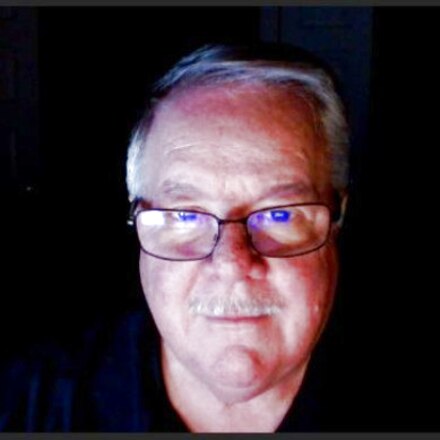
Michael Hiner
Geologist & Geophysicist · Managing Partner, TJFM Energy
Michael Hiner is a geologist and geophysicist with more than 40 years in energy, across global exploration and production, drilling, and marine and onshore geophysics, and eight years spanning TJFM and Argonne National Laboratory in energy, geology, and unmanned-systems technology. Mr. Hiner's geotechnical and regulatory work covers offshore wind, carbon capture (CCUS), and federal offshore rules. At JBI he advances drone-aviation education and workforce development for veterans, students, and under-represented communities in Houston, and he is a Life Member of the Commemorative Air Force, supporting the Wings Over Houston Air Show.
1 open line of work.
Each topic carries the argument, the evidence and its verification grades, with a numbered technical report behind it.
Work with the lab.
Open positions are listed on Careers.