The Glass Lab.
The Glass Lab works on the airspace and the people behind autonomous aviation: integrating unmanned aircraft into the national airspace, the training methods that build aviators, and the STEM workforce that will run it.
Led by Dr. Charles R. Glass, Executive Director, John Bailey Institute.
5 open lines of work.
Each topic carries the argument, the evidence, and a runnable model where one exists. Two are backed by a published technical report.
The Human Layer
The autonomous-airspace transition is treated as a technology problem. The binding constraint is the human, and the pipeline to produce that workforce does not yet exist.
Binding: WorkforceOpen the topic →Perception, Privacy, and Policy
Physical-AI systems can read operator state from an ordinary camera and microphone. The same perception that protects an operator can expose one.
Binding: RegulatoryOpen the topic →The Diffusion Layer
Physical AI runs on silicon and the world cannot make enough of it, because the binding constraint is people. Skill spreads along an adoption curve whose rate is a variable we can move.
Binding: WorkforceOpen the topic →Agriculture surveillance
Agriculture is measured at two extremes and decided in the middle. No agricultural sensing system this review located reports what fraction of that middle it cannot see.
Binding: varies (Measurement, Physics)Open the topic →The future of commerce
Commerce is where most people meet new technology. Embodied AI is arriving on the selling floor, and the people who work there need skills that do not yet have a curriculum.
Binding: WorkforceOpen the topic →What the lab works on.
The system and the workforce, from the airspace to the people who fly it.
Autonomy in the national airspace
Bringing unmanned and autonomous aircraft into the airspace safely: UAS traffic management and the interface with air traffic control.
How aviators are made
Interdisciplinary training methodologies that build aviation and STEM skill, from FAA Part 107 upward.
Recruit, retain, graduate
Pathways that move students into aviation and STEM careers: airport management, air traffic control, and unmanned aircraft.
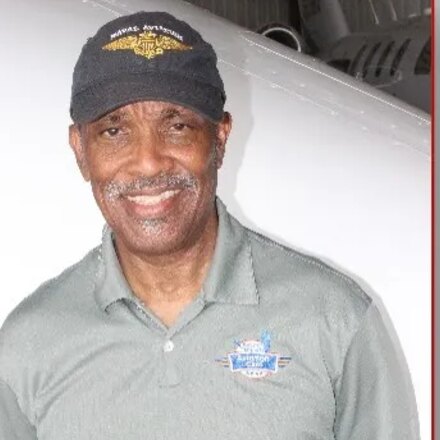
Charles R. Glass, EdD
Executive Director · John Bailey Institute
Dr. Charles R. Glass is the Executive Director of the John Bailey Institute, an Eagle Scout, former Navy officer, Eastern Airlines pilot, and commercial drone pilot, and a professional aviator and educator. Dr. Glass's funded research, backed by the Office of Naval Research, the U.S. Coast Guard, the Texas Department of Transportation, the Transportation Research Board, and the U.S. Department of Education, develops strategies to recruit, retain, and graduate students into STEM, and builds workforce pathways across airport management, air traffic control, and unmanned aircraft.
Work with the lab.
Open positions are listed on Careers.